Redesigning Complex Data Workflows
Hybrid Cohort Selection
Outcome
Project teams need to find specific patients (a cohort) from a database of millions. We redesigned fragmented cohort selection to make it a single-user workflow in a clear user interface. This hybrid cohort selection eliminated 2 weeks of alignment per project with 100% adoption, supporting complex use cases that represent 40% of deliveries today up from 10% of projects in 2023.
Context
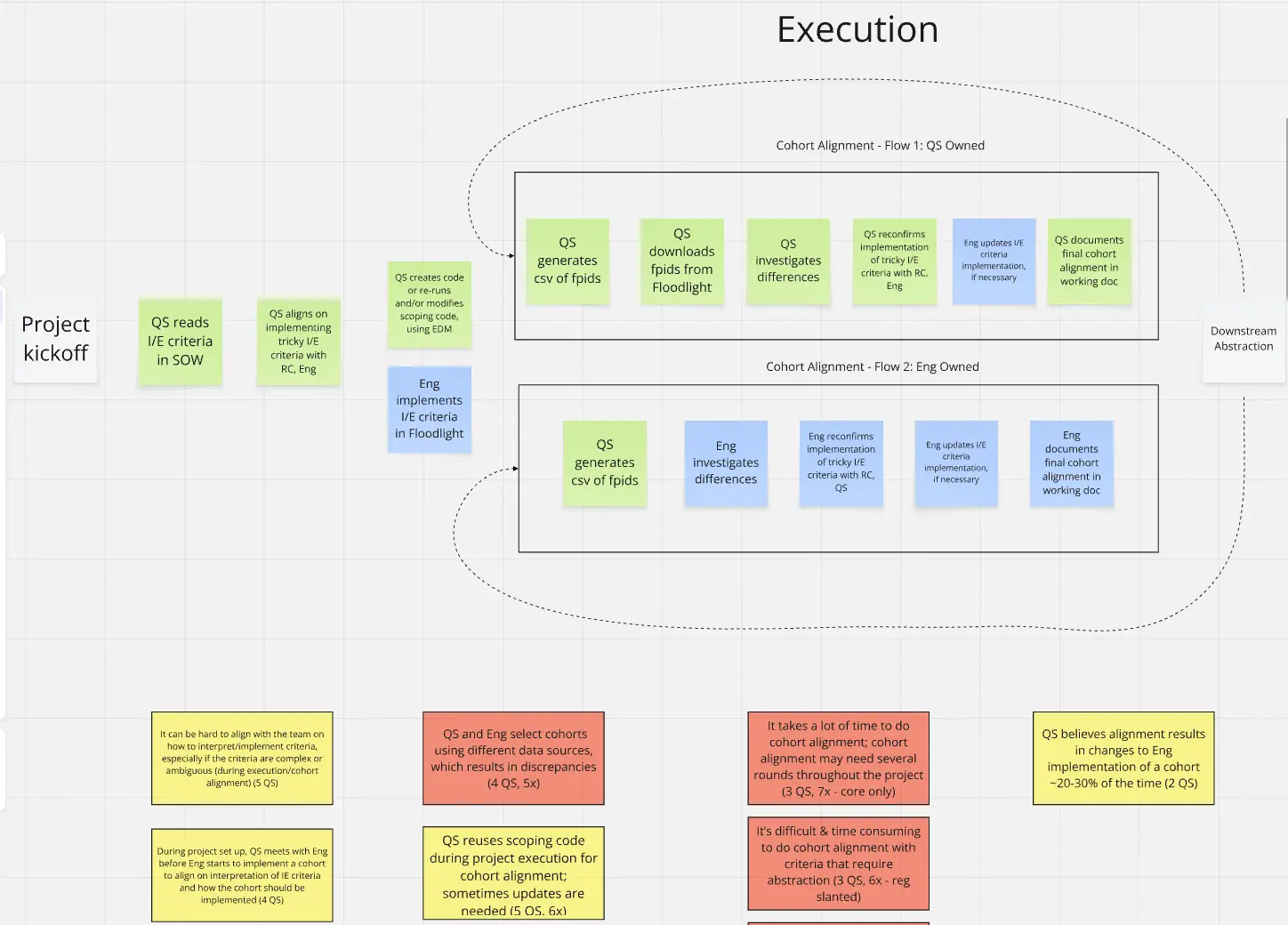
Projects begin in a scoping phase, where a research scientist (RS) builds out the filtering steps to get to the final cohort of interest. They work off their own snapshot of the patient db + their own templated and custom R code. The actual delivery pipelines have to be configured in Python by an engineer on a slightly different database who recreates the scoping work to the best of their ability. Cohort selection had to happen twice and then RS and engineers have to align and understand why patient counts & individuals may not be the same. Projects would block off two weeks for cohort alignment before kicking off in earnest.
Marketing / Comprehension
We realized that RS should be able to directly interact with production dbs. The team collaborated with our platforms team, who were working to create workflow packages that allowed R users to directly view and manipulate prod data (via Workbench + Posit Connect to S3). We wanted to understand if RS was willing and able to understand their future role. We watched a couple live reactions to our “you could own cohort selection” landing page explainer and sent it to the wider Research organization.
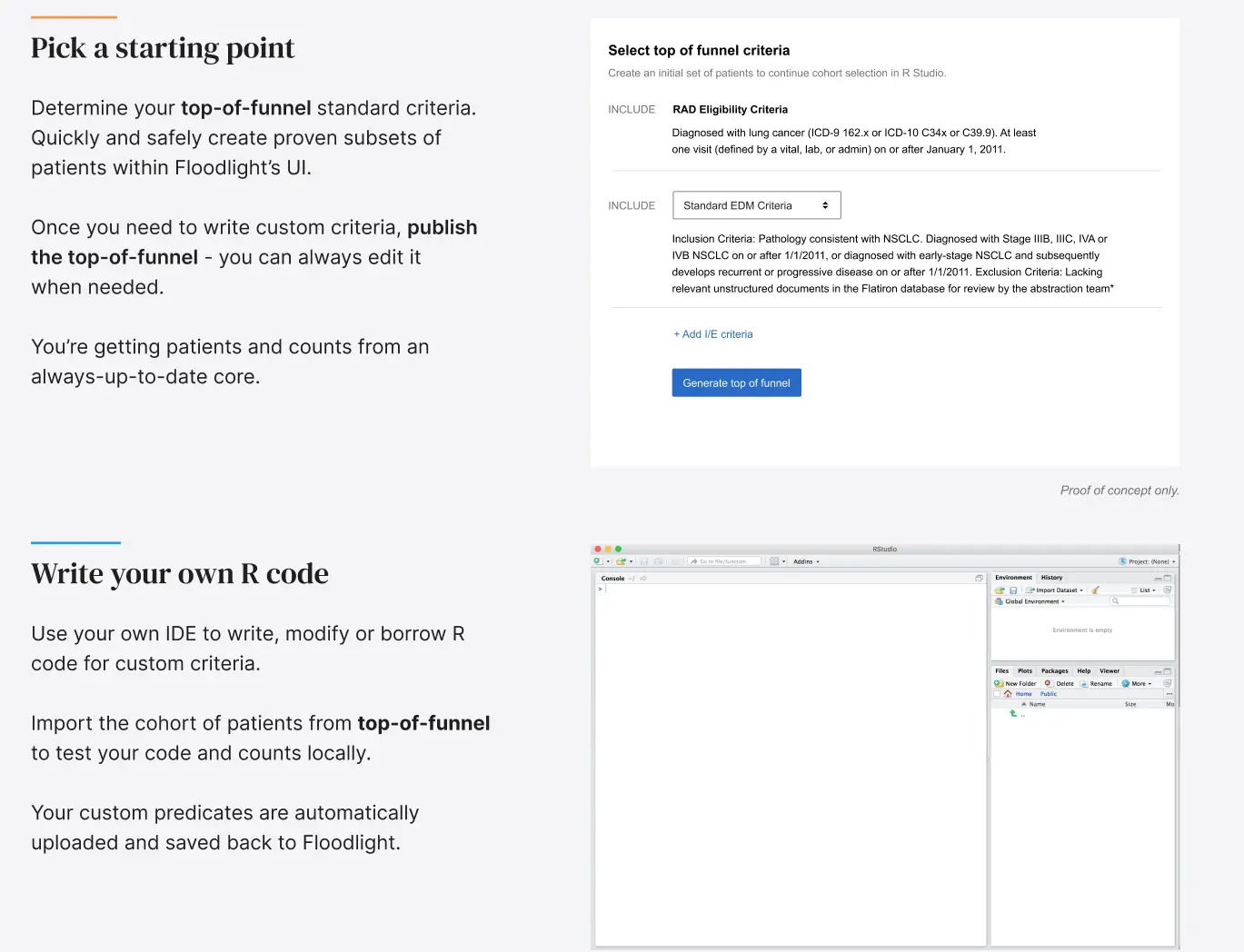
Feedback was positive though users had several follow-ups, especially around ambiguous language and concerns certain project types wouldn’t be supported. This technique helped us recruit a testing group, prioritize risks to investigate, and pick ubiquitous language early on.
Updating the UI
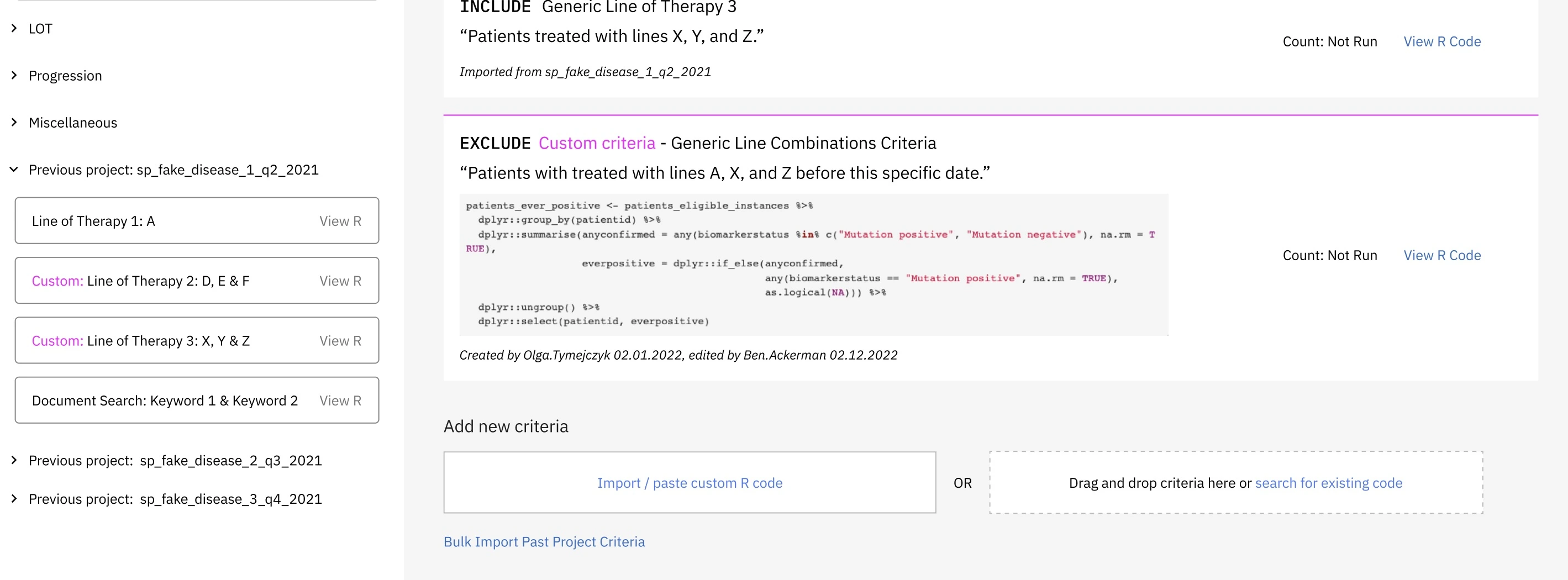
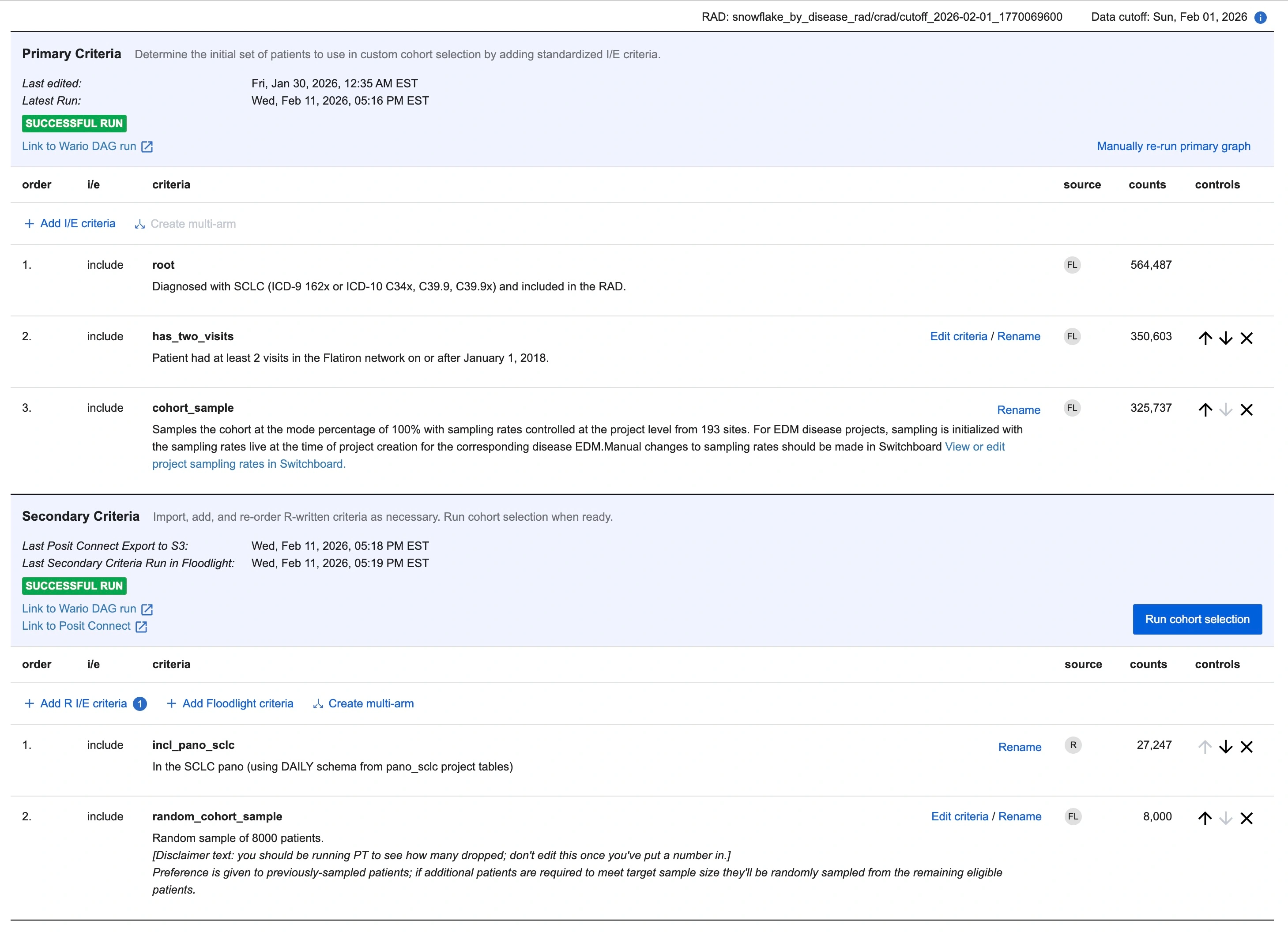
We originally wanted cohort selection to be more tightly coupled with RS R work with more in-app editing. But projects at Flatiron were evolving faster than the tech could support it; as we were building Cohort Selection, the eventual end user kept changing at a BU level. While we anchored to RS first, my designs reflect the uncertainty of full ownership. It was possible setup of standard and custom variables would still be split up, and it was important to visually create separate running spaces for both. The new Hybrid Cohort Selection was designed for change, with an emphasis on quickly spinning up projects, and pulling functional R code from S3 regardless of its original source.
Increased complexity
More and more projects relied on multi-arm cohorts, where nodes could split, have different criteria applied, and merge back. In old cohort select, an engineer was responsible for creating all nodes, then going back and deciding how they tied back to each other. This was not readable to anyone else.
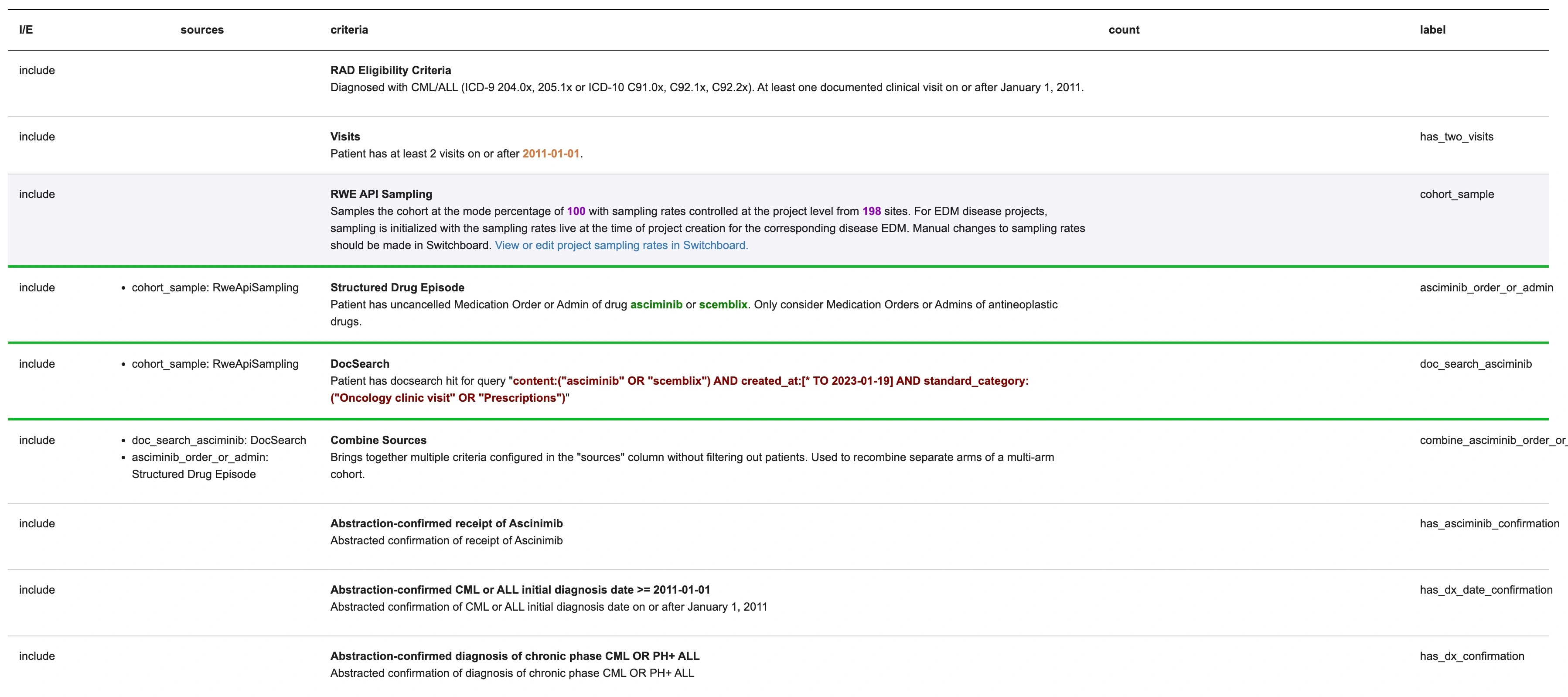
Our original tests focused on a better single column view of the nodes, and while users could piece together the workflow, they unanimously asked for a visual, node based editing view. When we tried a hacky version of this in Miro, we realized RS were hoping for far more creativity than Blocks pipelines would allow—like splits not remerging until the end—and decided we needed to improve the main workflow.
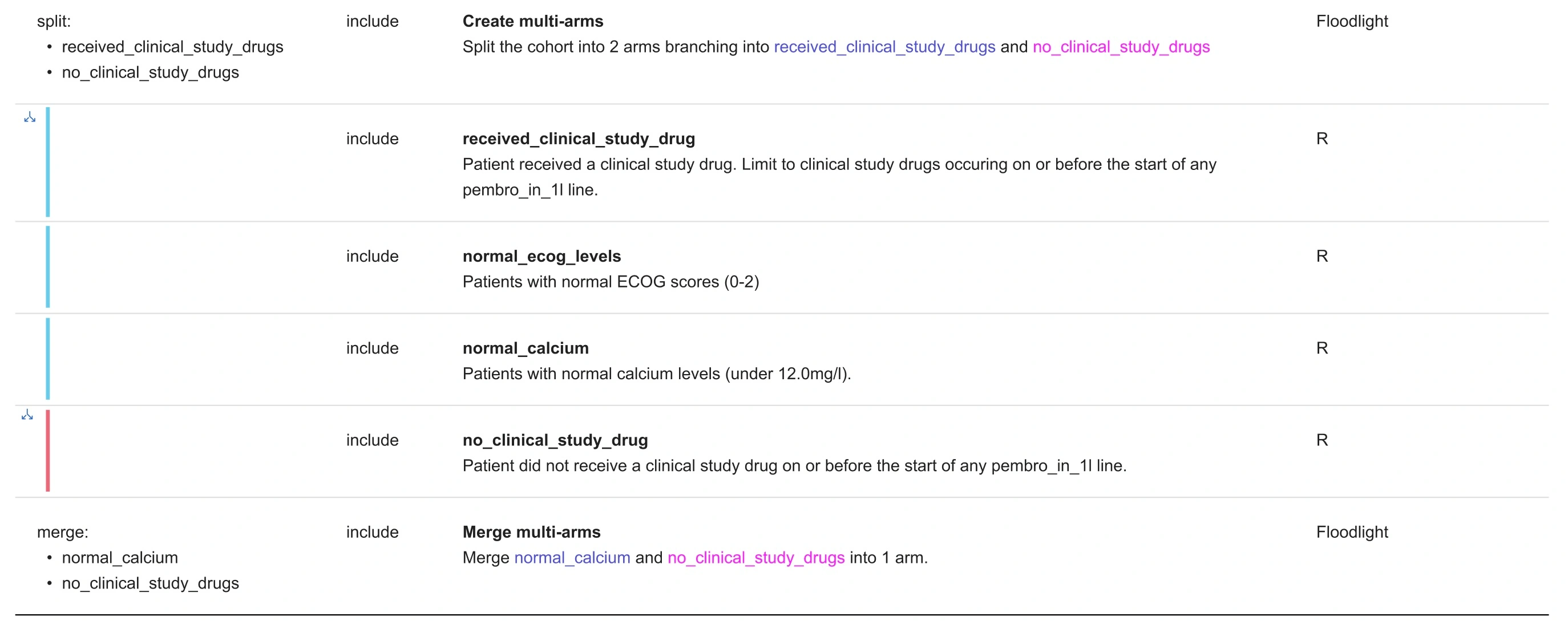
By getting users to create the structure of the split first and already displaying how branches would merge, we were able to visually explain how multi-arm worked and keep expectations in check.
As of 2026, 40% of projects use multi-arm with no usability issues, even with cohort selection now owned by a completely different user group.
← Back to work